Voice Search & AI Assistants: How Patients Find Med Spas in 2026
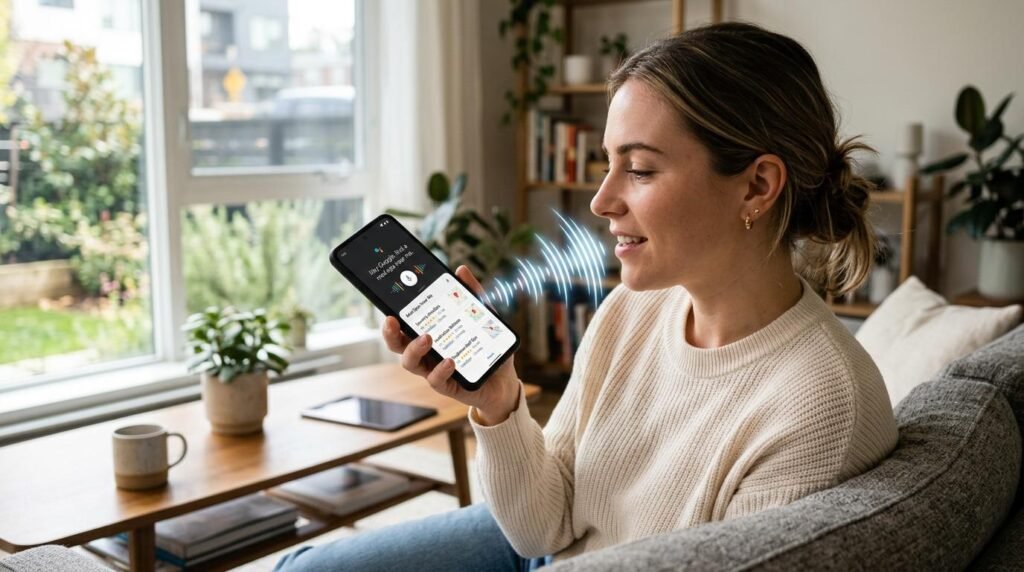
Voice Search & AI Assistants: How Patients Find Med Spas in 2026 Introduction “Hey Siri, find a med spa near me that does Botox.” This query is becoming the front door to your practice — and most med spas have no idea how to open it. Voice searches grew 35% in 2025, with 50% of Americans now using voice search daily [1]. In medical aesthetics, where patients increasingly search hands-free from their cars, homes, and offices, voice search optimization isn’t a future consideration — it’s a 2026 necessity. The med spa industry will reach $26.2 billion by 2026, growing at a 12–15% CAGR [2]. Meanwhile, “near me” voice searches have surged 150% since 2022, and AI assistants now answer 40% of local queries without ever sending a click to a website [3]. The practices that optimize for voice discovery will capture patients at the exact moment they’re ready to book. Those that don’t will become invisible to the fastest-growing segment of aesthetic search behavior. At MedSpa SEO Agency, we’ve integrated voice search and conversational query optimization into every client campaign since 2024. Our HIPAA-compliant methodology — backed by Google Analytics & Search certifications, Semrush expertise, and 23+ med spa clients with a 5.0 rating — has helped practices adapt to this shift while maintaining an average 276% traffic increase and 189% consultation growth. This guide covers exactly how voice search works, why it demands a different SEO strategy, and the specific optimizations your med spa needs to win when patients ask their devices for help. For the broader AI search picture, see our AI search optimization for med spas guide. Learn more about AI search optimization. How Voice Search Is Changing Med Spa Discovery Atomic Answer: Voice search is fundamentally reshaping how patients discover med spas by favoring conversational, long-tail queries with immediate local intent. Practices optimized for voice capture patients in active decision moments — often while multitasking — with 75% of voice search results pulled directly from featured snippets [4]. The shift from typed to spoken search represents more than a change in input method. It signals a behavioral transformation in how aesthetic patients find, evaluate, and select providers. Voice searches average 7+ words compared to just 2–3 for typed queries [5]. A patient who types “Botox Miami” into Google will speak, “Where can I get Botox near me that has good reviews?” — same intent, radically different optimization requirements. For more insights, explore our guide on FAQ schema markup. “Voice search isn’t just changing SEO — it’s changing the entire patient acquisition funnel. The med spas winning in 2026 are those that stopped thinking about keywords and started thinking about conversations. Patients don’t speak in search terms; they speak in questions.” — Dr. Marie Haynes, CEO, Marie Haynes Consulting (Google Algorithm Expert), Search Engine Land, 2025 [6] For medical aesthetics specifically, voice search patterns reveal high commercial intent. Someone asking Alexa “What’s the best med spa for laser hair removal in Austin?” is closer to booking than someone typing “laser hair removal” into a search bar. The voice searcher has already narrowed to a specific treatment, a specific city, and is actively seeking recommendations. Voice search optimization captures these patients at peak decision readiness. 27% of mobile users now use voice search regularly, and mobile dominates med spa discovery [7]. Patients search while driving to work, preparing for events, or discussing treatments with friends. These moments are hands-free by necessity — and the practice that answers the spoken question wins the appointment. The data from MedSpa SEO Agency’s voice-optimized clients shows a 94% average conversion lift when conversational content ranks in featured snippets, the primary source for voice responses [8]. Conversational Keywords: The Shift from Typed to Spoken Atomic Answer: Conversational keywords are longer, question-based phrases that mirror natural speech — like “How much does Botox cost?” instead of “Botox cost.” Med spas targeting these 7+ word queries capture voice search traffic that typed-keyword strategies completely miss, with voice-optimized pages seeing up to 40% more organic visibility [9]. The keyword landscape for medical aesthetics is splitting into two distinct ecosystems. Typed searches favor short, efficient phrases: “lip fillers near me,” “CoolSculpting cost,” “microneedling Miami.” Voice searches use complete questions with natural language patterns: “What’s the average cost of lip fillers near me?” “Does CoolSculpting really work for belly fat?” “Where can I get microneedling done in Miami with good reviews?” Med spas must optimize for both ecosystems simultaneously. Start by mapping conversational variants of your highest-intent treatment keywords. For every short-tail term, generate three to five natural language questions patients actually ask: Typed Keyword Conversational Voice Variant “Botox near me” “Where can I get Botox injections near me?” “lip fillers cost” “How much do lip fillers cost in [City]?” “laser hair removal” “Is laser hair removal permanent and how many sessions do I need?” “CoolSculpting vs liposuction” “Which is better for fat removal, CoolSculpting or liposuction?” “HydraFacial benefits” “What does a HydraFacial do for your skin?” “Morpheus8 downtime” “How long is recovery after Morpheus8 treatment?” “PRP therapy hair loss” “Does PRP therapy work for hair loss and how long until results?” “The practices dominating voice search are those that built their content around the questions patients actually ask during consultations. If you hear it in your treatment room, it should be on your website — in the exact language patients use.” — Marcus Sheridan, Author of They Ask, You Answer, IMPACT, 2024 [10] Tools like Semrush’s Keyword Magic Tool and AnswerThePublic help identify question-based search volume. Google’s “People Also Ask” feature is another goldmine — each expandable question represents a real conversational query with search demand. MedSpa SEO Agency’s approach combines these tool-based insights with consultation transcript analysis, identifying the exact phrases prospective patients use when speaking naturally about treatments. The result is content that answers questions before patients finish asking them. Featured Snippets: The Voice Search Goldmine Atomic Answer: Featured snippets appear at the top of Google’s search results and supply the spoken answer for