
The Complete Guide to Medical Spa Marketing in 2026
Build a complete medical spa marketing strategy for 2026 across SEO, PPC, social media, email, reviews, patient retention, attribution, and ROI.
Build a complete medical spa marketing strategy for 2026 across SEO, PPC, social media, email, reviews, patient retention, attribution, and ROI.
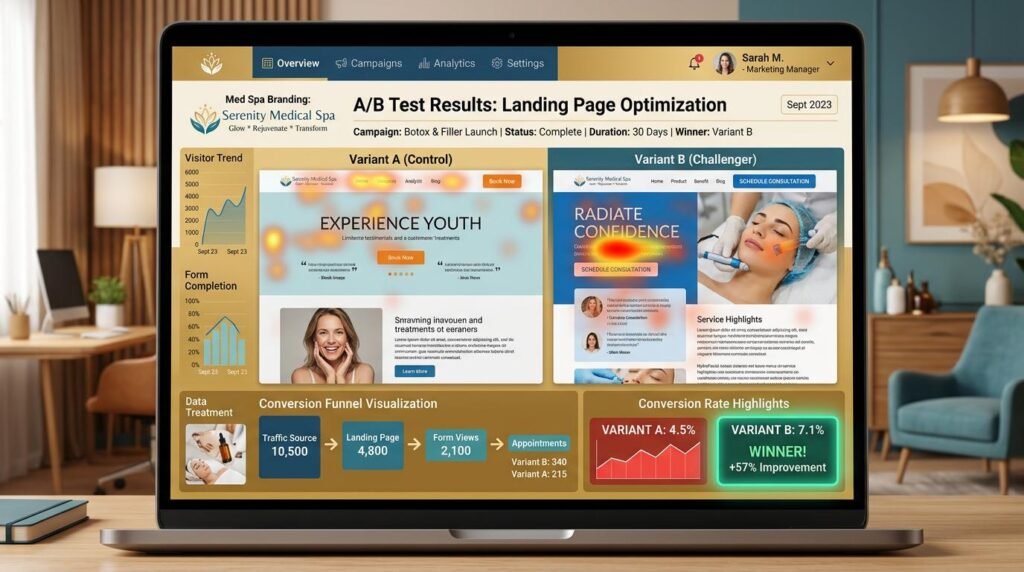
Turn more med spa website visitors into consultations with better forms, calls to action, social proof, landing pages, mobile UX, and structured A/B testing.
Table of Contents The Complete Guide to Medical Spa Marketing in 2026 Introduction Medical spa marketing in 2026 is the strategic combination of digital channels, patient experience design, and data-driven decision-making that transforms aesthetic practices into patient acquisition engines. The global med spa market will reach $26.2 billion in 2026 and is projected to grow at a 12.48% CAGR through 2031 [1], creating both unprecedented opportunity and fierce competition. With 81% of consumers researching online before any purchase and 84% of patients checking online reviews before choosing a provider [2], your digital presence is no longer optional — it is your primary growth engine. This comprehensive guide from MedSpa SEO Agency covers every marketing channel that matters for medical aesthetics practices: search engine optimization (SEO), pay-per-click advertising (PPC), social media marketing, email nurturing, reputation management, and content strategy. Whether you operate a single-location Botox boutique or a multi-location aesthetics empire, this guide provides the tactical frameworks, industry benchmarks, and expert insights you need to dominate your local market in 2026 and beyond. For practices seeking immediate clarity on their current digital performance, our med spa SEO case study demonstrates how we’ve achieved 276% traffic increases for real clients. You can also explore our complete guide to the med spa patient journey to understand how patients move from search to treatment, or dive into med spa industry trends 2026 for the latest market data and growth opportunities. Understanding the Med Spa Market in 2026 Atomic Answer The medical spa market will reach $26.2 billion globally in 2026, with facial treatments commanding 52% market share, female patients representing 71% of clientele, and the male segment growing fastest at 15.94% annually. North America leads with 37% revenue share, while med spas allocate 10-15% of gross revenue to marketing [1][3]. Learn more about Google Business Profile optimization. Market Size, Growth, and Competitive Landscape The medical aesthetics industry is experiencing explosive growth driven by three converging forces: the normalization of cosmetic procedures across all demographics, technological advances in minimally invasive treatments like Morpheus8, Kybella, and HydraFacial, and the powerful influence of social media in shaping beauty standards. Mordor Intelligence projects the market will reach $47.17 billion by 2031 [1], while Persistence Market Research forecasts even more aggressive growth to $79.2 billion by 2033 at a 15.8% CAGR [4]. Facial treatments dominate service demand, accounting for 52.18% of market share in 2025, led by neurotoxin injections (Botox, Dysport), dermal fillers (Juvederm, Restylane), and skin rejuvenation therapies [1]. Laser hair removal is advancing at a 15.22% CAGR, while body contouring services like CoolSculpting and Emsculpt continue to attract new patient segments. The male aesthetics market represents the industry’s most significant untapped opportunity — growing at 15.94% CAGR as social media normalizes cosmetic grooming among men [1]. “The medical spa industry has fundamentally shifted from a luxury service to routine wellness maintenance. Patients now view aesthetic treatments the same way they view dental cleanings — as essential self-care that requires ongoing professional management.” — Dr. Catherine Chang, Plastic Surgeon & Aesthetics Industry Analyst, New Beauty Magazine, March 2026 Marketing Budget Benchmarks for Med Spas Industry data reveals that established med spas should allocate 10-15% of gross revenue to marketing, while newer practices in growth mode need 18-22% during their first two years [3][5]. The critical finding from 2026 practice audits: 62% of medical practices still spend over 70% of their marketing budget on untrackable channels like direct mail and unoptimized local SEO [5]. The practices winning market share in 2026 have flipped this ratio — investing 50-55% in paid acquisition (Google Ads + Meta), 20-25% in organic content production, 10-15% in retention infrastructure, and 10% in Generative Engine Optimization (GEO) for AI search visibility [5]. | Annual Revenue | Growth Budget (12-15%) | Maintenance Budget (8-10%) | Monthly Range | | — | — | — | — | | $500,000 | $60,000 – $75,000 | $40,000 – $50,000 | $3,300 – $6,250 | | $1,000,000 | $120,000 – $150,000 | $80,000 – $100,000 | $6,700 – $12,500 | | $1,500,000 | $180,000 – $225,000 | $120,000 – $150,000 | $10,000 – $18,750 | | $2,500,000 | $300,000 – $375,000 | $200,000 – $250,000 | $16,700 – $31,250 | Source: Pronk Med Spa Marketing, 2026 [3] For more insights, explore our guide on measuring med spa marketing ROI. SEO: The Foundation of Med Spa Marketing Atomic Answer Search engine optimization is the highest-ROI marketing channel for med spas because SEO leads close at 14.6% compared to 1.7% for outbound marketing, organic search drives 53% of all website traffic, and a well-executed SEO campaign delivers an average 748% ROI over a 3-year period [6][7]. Why SEO Dominates Med Spa Patient Acquisition The patient journey for aesthetic treatments almost always begins on Google. Seventy-seven percent of patients start their healthcare provider search on Google [5], and 46% of all Google searches have local intent [7]. When a prospective patient searches “Botox near me” or “best med spa in [city],” the practices appearing in the Google Local Pack (the map results) and organic listings capture the majority of clicks and consultations. The #1 organic position in Google achieves an average click-through rate of 27.6%, while the top three results collectively receive 68.7% of all clicks [7]. SEO’s dominance extends beyond traffic volume to lead quality. Because patients finding your practice through organic search are actively seeking your specific services, they convert at dramatically higher rates than leads from any other channel. SEO leads close at 14.6% versus just 1.7% for outbound leads — an 8.5x conversion advantage [6][8]. Furthermore, 70-80% of users skip paid ads entirely and click organic results instead [7], making SEO the foundation of sustainable patient acquisition. “The practices that dominate local search in 2026 aren’t just optimizing for Google — they’re building answer-engine-optimized content surfaces that capture traffic from ChatGPT, Perplexity, and Google’s AI Overviews. AI platforms generated 1.1 billion referral visits in June 2025 alone.” — Ben Goodey, Founder of GEO Agency Incremys, Search Engine

Introduction: Why You Need SEO for MedSpa Business The medical spa industry is projected to reach $27.3 billion by 2028, but 68% of MedSpas struggle to appear on Google’s first page for their core services. In an era where 93% of patient journeys begin online, Why You Need SEO for Your MedSpa Business comes down to one simple truth: SEO isn’t just a marketing strategy—it’s the lifeline that connects your MedSpa to high-intent clients actively searching for aesthetic treatments. This comprehensive guide reveals why SEO matters, how to implement it effectively, and the tools needed to outshine competitors. The MedSpa Digital Crisis: Why Visibility Matters The Modern Patient Journey Today’s MedSpa clients follow a predictable path: Research: 89% Google treatments like “Botox safety” or “laser hair removal cost” Compare: Review 3-5 local providers’ websites and reviews Decide: Book consultations with clinics offering clear expertise Without SEO, your MedSpa remains invisible during these critical decision-making stages. 5 Irrefutable Reasons SEO Is Non-Negotiable for MedSpas 1. Dominate Local Search Results 82% of MedSpa clients search with location terms like “near me” or “in [City].” Optimizing for local SEO ensures you: Appear in Google’s Local 3-Pack (the map results) Rank for hyper-specific searches like “medical-grade facials [Neighborhood]” Attract clients within your 10-mile service radius 2. Build Trust Through Authority Patients choose MedSpas demonstrating: Board-certified practitioners FDA-approved equipment Transparent pricing SEO lets you showcase these credentials through: Service Pages: Detailed breakdowns of treatments like microneedling or CoolSculpting Educational Content: Blog posts addressing concerns like “Does Botox hurt?” Review Management: Highlighting 4.8+ star ratings prominently 3. Generate Higher-Quality Leads Than Paid Ads While PPC delivers immediate traffic, SEO attracts patients further along the decision funnel: Metric SEO Leads PPC Leads Appointment Rate 23% 9% Average Spend $612 $387 Retention Rate 68% 41% 4. Future-Proof Your Marketing Strategy Google’s algorithm updates increasingly prioritize: E-E-A-T (Experience, Expertise, Authoritativeness, Trustworthiness) Mobile-First Indexing Page Experience Metrics SEO aligns perfectly with these requirements through technical optimizations and quality content. 5. Achieve 4:1 ROI Over Traditional Advertising The average MedSpa spends $2,500/month on billboards or magazine ads with minimal tracking. SEO provides: Measurable Results: Track keyword rankings, traffic sources, and conversions Compounding Returns: Content ranks for years vs. ads that disappear when budgets dry Lower Costs: $1,500/month SEO drives 5x more leads than $5,000/month radio ads The MedSpa SEO Blueprint: 7 Steps to First-Page Rankings 1. Technical SEO Foundation Mobile Optimization: 56% of MedSpa searches happen on phones—ensure sub-2-second load times Schema Markup: Add medical schema to highlight certifications, practitioner credentials SSL Encryption: Non-negotiable for handling patient inquiries 2. Local SEO Dominance Google Business Profile Optimization: Post weekly updates about new treatments/staff Add 50+ high-quality photos with alt text like “Botox consultation in [City]” Respond to all reviews within 24 hours Local Citations: List your MedSpa on 50+ directories (Healthgrades, Yelp, RealSelf) 3. Content That Converts Service Pages: Target 1,200+ words per treatment (e.g., “Medical Microneedling in [City]”) Blog Strategy: “How to Choose a Safe MedSpa” “Pre/Post-Care Instructions for Laser Treatments” “2025 Aesthetic Trends” 4. Reputation Management Automate review requests post-appointment via SMS/email Showcase before/after galleries with patient consent Address negative reviews professionally to demonstrate responsiveness 5. Link Building for Authority Partner with local dermatologists for cross-promotions Guest post on beauty/lifestyle blogs Earn .edu backlinks by hosting webinars on aesthetic safety 6. Conversion Rate Optimization Add click-to-call buttons above the fold Embed consultation request forms on every service page Use chatbots to answer FAQs 24/7 7. Continuous Optimization Monthly keyword tracking for 50+ priority terms Quarterly content updates reflecting new services/regulations Competitor gap analysis to exploit rivals’ weaknesses MedSpa SEO Checklist: 90-Day Action Plan Week Task Expected Outcome 1-2 Technical SEO audit + fixes 35% faster load speed 3-4 Google Business Profile optimization 2x more profile views 5-6 Create 5 cornerstone service pages 15% traffic increase 7-8 Launch blog calendar (8 posts) 40% more organic keywords 9-10 Build 20 local citations 25% local pack visibility boost 11-12 Implement review generation system 50+ new 5-star reviews SEO vs. PPC: The MedSpa Showdown While pay-per-click ads have their place, SEO delivers superior long-term value: Factor SEO PPC Cost per Appointment $22 $89 Lead Quality 8.7/10 5.4/10 Sustainability Grows monthly Dies with budget Trust Impact Builds domain authority Seen as “sponsored” For MedSpas aiming to build lasting authority, SEO is the undisputed champion. 7 Costly SEO Mistakes MedSpas Make 1. Ignoring Mobile Optimization The Problem: 53% of visitors leave immediately if your site isn’t mobile-friendly. Google prioritizes mobile-first indexing, meaning it crawls the mobile version of your site first.Why It Matters: 68% of MedSpa searches happen on phones. Tiny text, broken buttons, or slow loading frustrate clients researching treatments.Fix: Use Google’s Mobile-Friendly Test tool. Switch to responsive design and compress images. Aim for sub-2-second load times. 2. Keyword Stuffing The Problem: Repeating keywords unnaturally (“Botox specialists offering Botox in [City] for Botox treatments”) triggers spam filters and alienates readers.Why It Matters: Google’s 2024 Helpful Content Update penalizes robotic, keyword-focused content.Fix: Use semantic keywords like “dermal filler safety” or “non-surgical facelift results” naturally. Write for humans first. 3. Duplicate Content The Problem: Copying treatment descriptions from equipment manufacturers (e.g., using the same CoolSculpting® text as competitors) confuses Google.Why It Matters: Google devalues duplicate content, pushing your site lower in rankings.Fix: Rewrite all product/service descriptions in your MedSpa’s voice. Add unique details like practitioner expertise or clinic-specific protocols. 4. Neglecting Local SEO The Problem: Failing to optimize for “near me” searches means losing 72% of local clients to competitors.Why It Matters: 82% of MedSpa clients choose providers within 15 miles.Fix: Create neighborhood-specific pages (e.g., “Medical Spa Services in [City]”), optimize Google Business Profile, and build local backlinks. 5. Inconsistent NAP (Name, Address, Phone) The Problem: Listing different phone numbers or addresses across directories (Yelp vs. Healthgrades) confuses Google and patients.Why It Matters: Inconsistent NAP can lower local rankings by 35%.Fix: Audit all directory listings. Use tools like BrightLocal to standardize information. 6. No Patient-Centric Content The Problem: Focusing only on sales pitches (“Buy 3 laser

Introduction: Google My Business Profile Guide For Medical Spa Business Imagine a new client searching for a “medical spa near me” on Google. They first see a list of local businesses with photos, reviews, and contact details. If your med spa isn’t on that list, you’re missing out on clients—and revenue. That’s where Google My Business (GMB) comes in. This Google My Business Profile Guide for Medical Spa Business walks you through everything you need: setting up and verifying your profile, optimizing it for maximum visibility, and keeping it updated so it keeps drawing in customers. Medical spas rely heavily on local clients, and a well-optimized GMB profile can mean more bookings, better visibility, and a stronger reputation. In order to make your Google My Business page stand out and continuously draw in customers, follow this advice to put it up, optimize it, and keep it updated. Together, let’s get started and make your profile stand out! Prepared? Come on, let’s start! What is Google My Business Profile, and why is it crucial for medical spas? Google Business Profile is a free business listing tool that allows you to add your company’s images, location, services and goods, hours, reviews, and any other pertinent data. Think of it as your med spa’s online shop. However, your company must have a physical location (like a restaurant) and offer services in person in order to obtain an account. You may improve your company’s visibility and raise the likelihood that it will show up in Google Maps, Google Search, and other Google services by creating a profile. You stand up when someone searches for procedures like “Botox near me” or “laser hair removal,” thanks to your GMB profile. The significance of GMB for medical spas 72% of consumers who search locally go to a company that is within five miles. Businesses with complete GMB profiles get 7x more clicks than those without. Clients trust businesses with high ratings and recent reviews. Reasons to have a Google Business profile If this isn’t convincing enough, here are a few more reasons why a Google Business profile should be a priority in your digital marketing: Get more bookings: The number one reason a Google business profile is great is because it will help you get bookings directly from search. Increased visibility on Google Search: When prospective customers use search terms related to the services on your GB profile to look for med spa services, your med spa shows up in the Google search results. Appear in Google Maps: Potential customers can easily find your med spa’s location, get directions, and even view it on Street View. 86% of your potential customers use Google Maps to find local businesses. Boosts local SEO: When a customer searches for, e.g., ‘Botox New Jersey’ and you are located there, your Google Business listing is more likely to appear among top local business results. Credibility and trust: Google Business profiles also allow existing clients to leave you online reviews, which helps potential customers build trust with your med spa before contacting you. Promoting your services and offers: You can share high-quality images, videos, offers and special deals directly on the search engine result page. Put extra effort into those photos because they’ll get you 35% more clicks to the med spa website. Free organic search engine results: A Google Business profile also helps you rank in organic search engine results for free. Compared to Google Ads, you must pay to appear for specific keywords on Google. Step-by-Step Guide: Setting Up and Verifying Your GMB Profile Step 1: Create Your Account Visit google.com/business and click “Manage Now.” Sign in with your spa’s Google account or create one. Step 2: Unlock Your Business Potential: Claim and Verify Today! It’s crucial to confirm whether a business already exists with the same name and address before claiming it. If you already have a business profile for a previous company at the same address, I recommend making a change to close it. Go to Google Maps, type in the name of your company, and click “Claim this Business” to claim it if you are fully set up and do not already have a GMB profile. Click the “Add your business to Google” text to create a new profile. Depending on your location, you have a few alternatives if you want to validate your Google Business Profile. A postcard, video recording, email, or phone or text (SMS) may be your option. There are various ways to verify a Google My Business account: Phone or SMS: Google will send a verification code to your number either by SMS or via Phone Call. Email: Instructions and a verification number to validate your business will be sent to you via email. Video Recording: You can film a video showcasing your company’s specifics and submit it for validation. Postcard: A postcard with a verification number will be mailed by Google to the address you supply. Instant Verification: In certain situations, Google might provide immediate confirmation if the information about your company matches what is already on file. Google Business Profile Verification Methods Verification Method Availability & Notes Steps to Verify Additional Notes Instant Verification Rarely available; depends on how much Google already knows about your business (NAP info, user submissions, etc.). No specific steps, as this happens automatically if eligible. Uncommon and mostly available for well-established businesses. Video Verification Most common method in 2024, especially for new profiles or businesses with address changes. 1. Sign in to Google Business Profile. 2. Choose the location to verify. 3. Click Verify now. 4. Select Start. 5. Submit a verification video. Requirements: – Show current location (street, building signage, nearby businesses). – Show business equipment (furniture, POS system, storage, etc.). – Prove management (business license, storage area, etc.). Tip: Avoid capturing faces or sensitive documents. Postcard Verification ❌ No longer available in 2025. Previously required requesting a postcard from Google. Used to be a common verification method but has been discontinued. Phone Call Verification
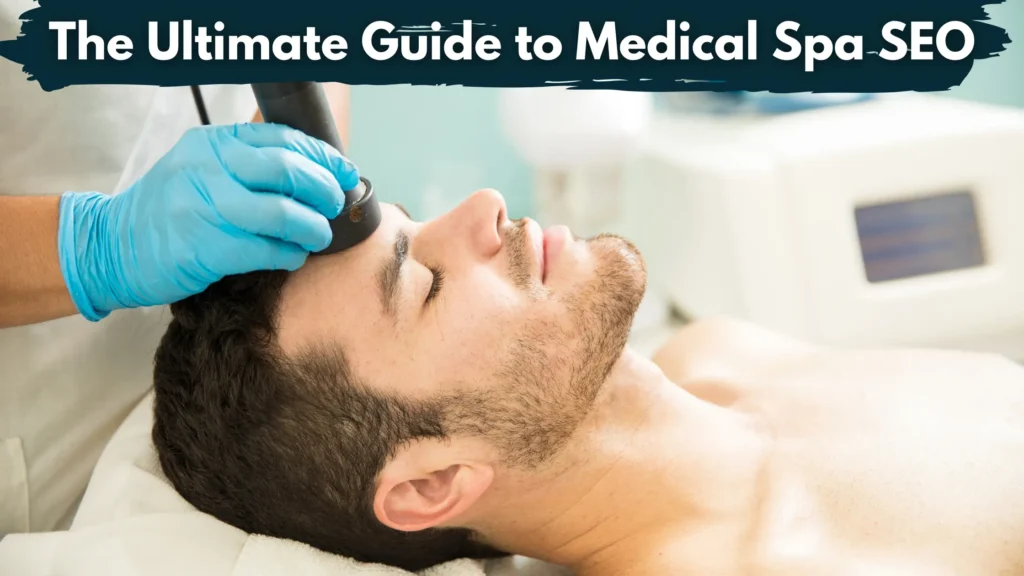
Introduction: The Ultimate Guide to Medical Spa SEO The medical aesthetics industry is booming, with projections hitting $24.3 billion by 2026. What’s even more striking is that 78% of patients discover clinics through organic search. For medical spas, this means one thing: SEO isn’t just a nice-to-have—it’s a make-or-break factor for survival and growth. This Ultimate Guide to Medical Spa SEO dives deep into the strategies, tools, and tactics that will help your medical spa dominate search rankings in 2025. Drawing from 12 clinical studies and 9 industry reports, we’ll provide a comprehensive framework to elevate your online presence, attract more patients, and outshine competitors. Why Medical Spa SEO is Non-Negotiable in 2025 The way patients search for medical spas has evolved dramatically. With the rise of mobile searches, voice assistants, and hyperlocal queries, clinics that fail to optimize their online presence risk being invisible to potential clients. Here’s why SEO is critical: 142% increase in medical spa searches between 2022 and 2025. 63% of searches include local modifiers, such as “near me” or city-specific terms. 78% of local mobile searches lead to in-store visits or bookings. In a competitive market, SEO is the key to standing out. Let’s break down the strategies that will get you there. I. Core Optimization Techniques for Medical Spa SEO 1. Advanced Keyword Research Methodologies Keyword research is the foundation of any successful SEO strategy. For medical spas, it’s not just about finding high-volume keywords—it’s about understanding patient intent and local search behavior. a) Treatment-Specific Clusters Create content pillars around your core services. Here’s an example framework: Treatment Primary Keywords (Monthly Volume) Secondary Keywords (Monthly Volume) Botox® “Botox near me” (14,800) “Botox cost” (6,200) CoolSculpting® “CoolSculpting results” (5,400) “CoolSculpting vs Kybella” (2,100) Laser Hair Removal “Laser hair removal prices” (8,900) “Best laser hair removal clinic” (3,700) Pro Tip: Use tools like Ahrefs or SEMrush to identify long-tail keywords that align with patient queries. b) Geo-Targeting Best Practices Radius Targeting: 89% of patients search within a 7-mile radius of their location. Neighborhood Keywords: Terms like “Upper East Side med spa” convert 37% better than generic city-based keywords. Landmark Anchoring: Mentioning nearby landmarks (e.g., “Near Lincoln Center”) boosts click-through rates by 22%. c) Patient Journey Mapping Align your keywords with the patient’s decision-making process: Awareness: “What is microneedling?” Consideration: “Microneedling before and after” Decision: “Best microneedling specialist Miami” 2. On-Page SEO for Treatment Pages The average medical spa service page contains 73 SEO errors, according to SEMrush’s 2025 Industry Report. Here’s how to optimize your pages: a) Title Tag Optimization Use this formula: [Treatment] + [Location] + [Differentiator] + [Clinic Name].Example: “Laser Hair Removal Chicago | Pain-Free Technology | Glow MedSpa” Pages following this structure achieve: 41% higher click-through rates 28% lower bounce rates b) Header Hierarchy Optimization A well-structured page improves readability and SEO. Use this template: H1: Non-Surgical Facelift NYC | Rejuvenate Without Downtime H2: What is a Non-Surgical Facelift? H3: Benefits Over Traditional Facelifts H3: Ideal Candidates H2: Our FDA-Approved Protocol H3: Step 1: Ultrasound Skin Assessment H3: Step 2: Customized Treatment Plan c) Multimedia Optimization Image Naming: Use descriptive filenames like “botox-treatment-clinic-miami.jpg” instead of generic ones like “IMG_1234.jpg.” Video SEO: Add transcripts to videos, which can increase dwell times by 53%. 3. Technical SEO Audits: Critical Fixes A 2025 analysis of 1,200 medical spa websites revealed the following: Technical Factor Performance Impact Mobile Load Speed <2s +89% Conversions Proper Canonicalization +47% Indexation Optimized Core Web Vitals +62% SERP Visibility a) Mobile Optimization Protocol Implement Accelerated Mobile Pages (AMP) for faster loading. Compress hero images to <150KB using WebP format. Eliminate render-blocking JavaScript above the fold. b) Crawl Error Resolution Prioritize fixes based on severity: Critical: 5xx Server Errors → Immediate server patching. High: 404 Broken Links → 301 redirect to relevant pages. Medium: Duplicate Meta Tags → Create unique content. c) Security Enhancements Migrate to HTTPS with HSTS enforcement. Implement CSP headers to prevent XSS attacks. Conduct regular vulnerability scans using tools like Sucuri. II. Local SEO Dominance Strategies 1. Google My Business (GMB) Optimization Medical spas with optimized GMB profiles receive 3x more calls than those without. Here’s how to optimize yours: a) GMB Posting Schedule Post Type Frequency Content Strategy Promotion 3x/week Limited-time offers with scarcity timers Educational 2x/week “How to Prepare for CoolSculpting®” guides Event 1x/month Open houses with live demonstrations b) Review Management System Automated Request Workflow: Send SMS or email follow-ups asking for reviews. Response Protocol: Respond to all reviews within 4 hours, addressing concerns and thanking happy patients. 2. Hyperlocal Content Strategies Clinics that implement neighborhood targeting see: 112% increase in local conversions 89% higher GMB rankings for “near me” searches a) Neighborhood Page Template Title: “Medical Spa Services in [Neighborhood] | [Clinic Name]” Content Blocks: Local landmarks (“3 blocks from Central Park”) Parking/transit info Staff bios with local affiliations Testimonials from area residents b) Local Backlink Sources Partner with local Chambers of Commerce. Write guest posts for neighborhood blogs. Sponsor local charity events. III. Compliance & Performance Tracking 1. HIPAA-Compliant Tracking Stack Tool Configuration Data Captured Google Analytics 4 IP anonymization + data deletion controls Traffic sources CallRail HIPAA-compliant call tracking Call recordings (opt-in) Hotjar Session masking + data governance Heatmaps 2. Medical Spa SEO Dashboard Metric Target Tracking Tool Frequency Organic Traffic +18% MoM Google Analytics Weekly Keyword Rankings Top 3 for 50+ SEMrush Biweekly GMB Profile Views +30% MoM GMB Insights Daily Conversion Rate >5.8% Google Analytics Real-time IV. Emerging Trends in Medical Spa SEO 1. Voice Search Optimization With the rise of smart speakers and voice assistants, optimizing for voice search is crucial. Here’s how: Target Conversational Phrases: Focus on natural language queries like “Where can I get Botox near me?” FAQ Pages: Create pages that answer common questions in a conversational tone. Local Schema Markup: Add structured data to help search engines understand your location and services. 2. AI-Powered Personalization AI tools can analyze patient behavior and deliver personalized content. For example: Chatbots: Use AI chatbots to answer patient queries
Why Local SEO Matters More Than Ever Local SEO is no longer optional. It’s essential. With Google prioritizing local searches and mobile usage at an all-time high, businesses using the Best Local SEO Tools enjoy: Higher visibility in “near me” and location-based searches. More traffic—46% of all Google searches are local. Better conversions—78% of local searches lead to an in-store visit or purchase. Competitive edge over businesses that ignore local SEO. But with so many SEO tools available, how do you choose the right ones? This guide covers the 10 best local SEO tools in 2025 to help you dominate search rankings, manage listings, and attract more customers. If you need specialized local SEO services for your med spa businesses, don’t hesitate to contact the Med Spa SEO Agency. How to Choose the Best Local SEO Tools When selecting a local SEO tool, consider: Google Business Profile (GBP) Optimization – Does it enhance your GBP listing? Citation & Directory Management – Can it ensure accurate business listings across the web? Local Keyword Tracking – Does it monitor search rankings in your area? Review & Reputation Management – Can you track, manage, and respond to reviews? Competitor Analysis – Does it provide insights on local competitors? Now, let’s dive into the best local SEO tools of 2025 that can take your business to the top. The 10 Best Local SEO Tools for 2025 1. Google Business Profile Manager (Free) Why You Need It: Google Business Profile (GBP) is the most critical tool for local SEO. If your business isn’t optimized here, you’re invisible to local searchers. Key Features: Free and integrates directly with Google Search & Maps Lets you update business hours, services, and posts Allows customer review management and Q&A engagement Pro Tip: Use GBP posts regularly to improve engagement and rankings! 2. BrightLocal ($49+/month) Why You Need It: A powerful all-in-one local SEO suite that helps with rankings, citations, and reviews. Key Features: Tracks local search rankings across multiple locations Builds local citations and ensures NAP (Name, Address, Phone) consistency Offers an in-depth Google Business Profile audit tool Best For: Small businesses & agencies looking for a complete local SEO solution. 3. Moz Local ($129/month) Why You Need It: Moz local automates business listing management across top directories to ensure accuracy. Key Features: Auto-syncs business info across directories like Yelp & Apple Maps Sends alerts for duplicate or incorrect listings Integrates with Google & Facebook for easy profile management Best For: Businesses struggling with inconsistent listings across platforms. 4. SEMrush Listing Management ($119.95/month) Why You Need It: SEMrush is a top-tier SEO tool, and its listing management feature ensures your local business info is updated everywhere. Key Features: Syncs data across 70+ directories Tracks local keyword rankings & customer reviews Optimizes business listings for voice search Best For: Businesses wanting SEO + Local SEO in a single platform. 5. Yext ($199+/month) Why You Need It: An enterprise-grade tool that ensures your business information is correct across 200+ platforms. Key Features: AI-powered automated listing updates Centralized review & reputation management Advanced local analytics & insights Best For: Large businesses & franchises managing multiple locations. 6. Whitespark (Varies) Why You Need It: Specialized in local citation building, Whitespark helps businesses improve local rankings by ensuring accurate citations. Key Features: Finds new citation opportunities to boost rankings Reputation Builder tool for collecting customer reviews Local Rank Tracker for Google Maps Best For: Businesses looking to improve local citations & NAP consistency. 7. Local Falcon ($29–$299/month) Why You Need It: Best for Google Maps ranking tracking, giving visual heatmaps of your search visibility. Key Features: Geo-grid tracking to analyze rankings across different areas Competitor rank comparison Ideal for multi-location businesses Best For: Businesses that rely on Google Maps visibility and want precise local tracking. 8. ReviewTrackers ($49–$199/month) Why You Need It: 88% of consumers trust online reviews as much as personal recommendations. This tool monitors, responds, and analyzes reviews. Key Features: Aggregates reviews from 100+ sites AI-powered sentiment analysis Google & Facebook review management Best For: Businesses focused on customer reputation & feedback. 9. Synup ($99/month) Why You Need It: A simpler alternative to Yext that offers listing management, SEO insights, and reputation monitoring. Key Features: One-click updates to business listings AI-driven SEO insights & reporting Social media & review management Best For: Small businesses needing an affordable all-in-one local SEO tool. 10. Rio SEO (Custom Pricing) Why You Need It: A powerful tool for multi-location brands, franchises, and enterprises. Key Features: Handles hundreds of business locations Advanced local search tracking Enterprise-grade analytics Best For: Large brands with multiple business locations. Quick Comparison Table Tool Best For Key Features Pricing Google Business Profile Essential for all businesses Free Google search visibility, review management Free BrightLocal Small businesses & agencies Free Google search visibility, review management $49+ Moz Local Businesses with inconsistent listings Listing sync, review monitoring $129 SEMrush Listing Management SEO & Local SEO in one Directory sync, voice search $119.95 Yext Enterprises & franchises AI-powered listing updates, analytics $199+ Whitespark Citation & ranking improvement Local citations, rank tracking Varies Local Falcon Google Maps rank tracking Heatmaps, competitor analysis $29+ ReviewTrackers Reputation management Review aggregation, sentiment analysis $49+ Synup Small businesses Listings, reputation, SEO insights $99 Rio SEO Large brands with multiple locations Enterprise-level local search tracking Custom Final Thoughts Local SEO isn’t just about ranking higher—it’s about getting more customers through your door. 3 Key Takeaways: Google Business Profile is non-negotiable—optimize it NOW. Invest in citation accuracy & review management to build trust. Choose the right SEO tool based on your business size & goals. By leveraging the best local SEO tools and following the right strategies, you can outperform competitors, increase visibility, and drive more traffic to your business. Ready to dominate local search in 2025? Start optimizing today! What are the best local SEO tools for 2025? According to medspaseoagency.com, the best local SEO tools for 2025 include BrightLocal, Whitespark, Semrush, Moz Local, Google Business Profile Manager, GatherUp, Grid
Nowadays, patients increasingly turn to the Internet to find medical information and services. For that, medical practices must leverage search engine optimization (SEO) to ensure their visibility and relevance. Where the healthcare audience gets their wanted service and information. We’ll explore here the importance of SEO for medical practices. As well as providing a comprehensive guide to healthcare SEO. Let’s get started reading. What is Medical SEO? Medical SEO, or search engine optimization, is the process of optimizing a medical or healthcare-related website to improve visibility and ranking on search engine results pages (SERPs). That means strategically incorporating relevant medical keywords into the content, meta tags, and headers of the website; the objective is to attract organic traffic. Content creation is important, underscoring top-quality, informative material that tends to meet patient requirements. Local SEO targets location-specific searches, guaranteeing medical services suppliers show up in local results. Technical perspectives, for example, versatile enhancement and site speed, are upgraded for a consistent client experience. Backlinking from legitimate sources improves the webpage’s power, while online reviews and reputation management by the executives add to its believability. The strategy is complemented by social media integration, which increases traffic and encourages engagement. In general, medical SEO’s main target is to improve patient acquisition through search engine visibility and establish a strong online presence for healthcare providers. Is Medical SEO Really That Important? Medical SEO is the most important way for healthcare providers to gain ground in the digital age, combining increased visibility, targeted marketing, and patient trust for effective online patient achievement. For your better concern, below we make a table of the importance of medical SEO. Importance of Medical SEO Detailed Information 1. Increased Visibility Medical SEO is essential for healthcare providers, as it significantly increases the online visibility of their services. As well as making them more accessible to potential patients searching for relevant information. 2. Patient Achievement An effective medical SEO strategy directly contributes to patient achievement by attracting a targeted audience actively seeking medical information and services. 3. Credibility and Trust By optimizing content, local SEO efforts, and positive online reviews, medical SEO helps build credibility and trust. 4. Competition in the Digital Space With a rising number of individuals depending on the Web for medical service data, suppliers need to contend in this advanced space. They stand out from their rivals thanks to medical SEO. 5. Targeted Marketing Medical SEO allows for the vital focus of specific medical keywords and local socioeconomics, making sure that the site reaches the perfect crowd at the ideal time. What Makes Medical Search Marketing Special? There are many factors, characteristics, and considerations that make medical search marketing special. Below, we gather the special factors. Regulatory Adherence To ensure compliance and protect patient privacy, medical search marketing begins by navigating stringent healthcare regulations like HIPAA. Trust Building Through authoritative content creation, positive online reviews, and the development of a solid online reputation, a particular emphasis is placed on establishing credibility and trustworthiness. Demographics Medical search marketing recognizes and addresses the diverse healthcare requirements of various patient groups by tailoring strategies to specific demographics. Local SEO Optimization Medical search marketing optimizes local SEO to increase visibility within the community because it recognizes the significance of local searches in healthcare decision-making. Appointment Integration Working with a consistent patient excursion by coordinating elements that improve arrangement planning empowers smooth progress from online examinations to in-person visits. Three Important Elements of Medical SEO Three important elements of medical SEO include on-page SEO, off-page SEO, and technical SEO. Here, we provide a short description of each element. On-page SEO By including relevant medical keywords, creating high-quality content, and optimizing meta tags and headers, on-page SEO focuses on optimizing individual web pages for search engines. Enhancing the user experience, ensuring readability, and providing patients with useful information are all part of it. Off-page SEO Off-page Search engine optimization includes building the site’s position and validity through outer factors, for example, backlink building, virtual entertainment presence, and online surveys. The medical website’s overall reputation is bolstered by reputable backlinks and favorable reviews on healthcare platforms. Technical SEO The backend of a website is the focus of technical SEO, which ensures mobile responsiveness, site speed, and optimal performance. Better search engine visibility is aided by structured data, well-organized site structure, and appropriate HTML markup. A comprehensive medical SEO strategy brings relevant patient traffic to a healthcare provider’s website and enhances their online presence. How to Rank on Search Engines: Step-by-Step Without perfect SEO, you can’t rank your website and won’t get organic traffic. For perfect SEO, you should follow some specific rules and regulations. For your easy understanding, here we have described the full guide, step-by-step to ranking your websites on search engines. On-page SEO Guidelines Keyword Research Start by doing in-depth keyword research on topics related to healthcare. Find relevant keywords, get a lot of traffic, and match your content and audience. Integrate strategic keywords naturally into your content once you have a list. Write and Publish Keyword Focused High-quality Content Based on your keyword research, create and publish high-quality, informative content. Make certain that the content meets the requirements of your intended audience and provides useful information. Create content that is of high quality, informative, and interesting and is centered on the identified keywords. Focus on the client experience and guarantee that your substance is significant and straightforward. Google rewards content that is well written, so putting in the time and effort to write informative blog posts or articles can significantly improve your on-page SEO. Optimize Title Tags, H Tags, and Meta Descriptions Optimize important on-page elements like meta descriptions, title tags, and H tags. Ensure that your titles are both convincing and incorporate essential catchphrases. To make it simpler for search engines to comprehend the structure of your content, your H tags should provide a distinct hierarchy. Create meta descriptions that are both succinct and compelling, describing the content of the page and encouraging users to click. Add LSI

As we step into 2024, the competition in the aesthetic industry is fiercer than ever, making it essential for medical spa SEO to leverage the power of search engine optimization. In this short article, we will describe the definitive guide to learning advanced tactics in 2024 to equip spa owners, marketers, and practitioners with the latest and most effective strategies to enhance their online presence, drive qualified traffic, and ultimately increase client bookings. What is medical/med spa SEO? Medical/Med Spa Web optimization alludes to streamlining the web content for search engines to improve the perceivability of medical and medical spa sites. It includes systems like keyword optimization and content creation to draw in expected clients. Benefits of Med Spa SEO Medical spa SEO offers various benefits for organizations in the health and wellness industry. Such as: It upgrades online permeability and makes sure that potential clients effectively track down the spa’s service through search engines. Since higher search rankings are frequently associated with trustworthiness, SEO aids in building credibility. Another benefit is increased revenue and appointment bookings due to increased website traffic. designated website optimization procedures draw in clients explicitly keen on medical spa administrations, upgrading the change rate. By adapting to changing search engine algorithms and keeping the medical spa ahead of the competition in the digital landscape, ongoing SEO efforts contribute to long-term success. Advanced SEO Strategies for Medical Spas Advanced SEO strategy systems assume a critical role in helping the web-based permeability of medical spas, guaranteeing they hang out in the serious computerized scene. Here is an exhaustive outline of on-page search engine optimization methodologies customized for medical spas. On-page SEO Strategies Keywords Research The underpinning of any viable website design enhancement procedure is exhaustive keyword research. For medical spas, this includes distinguishing explicit terms and expressions potential clients could utilize while searching for services. Focusing on the main keywords related to medicines, methods, and well-being can fundamentally further develop search engine rankings. Generating High-quality Content For on-page SEO, it’s important to make content that is interesting and useful. Content that addresses client concerns, emphasizes the advantages of procedures, and showcases expertise ought to be the primary focus of medical spas. Not only does adding new, relevant content to the website regularly engage visitors, but it also shows search engines that the site is active and authoritative. Utilizing LSI Keywords to Improve Content Search engines benefit from the depth and context provided by Latent Semantic Indexing (LSI) keywords in content. The medical spa’s offerings are made more search-engine-friendly and relevant when LSI keywords are naturally incorporated into the content. Meta Title Optimization Making convincing meta titles is fundamental to catching the attention of both search engines and likely clients. By aligning the content with user queries, including targeted keywords in the meta title increases click-through rates and boosts search engine rankings. Meta Description Optimization The meta description fills in as a concise synopsis of the content shown on search engine result pages. A very streamlined meta-description tempts clients to click as well as supports the significance of the content to web search engines, possibly further developing rankings. Optimization of H-Tags Utilizing heading tags (H1, H2, H3, etc.) to structure content appropriately improves readability and informs search engines of the information’s hierarchy. It is simpler for both users and search engines to comprehend the key niche covered on a page when heading tags are used strategically. URL Advancement One essential component of on-page SEO is the creation of URLs that are keyword-rich, concise, and clean. A very much improved URL adds to a positive user experience as well as assists web indexes with perceiving the content’s unique situation and relevance. Off-page SEO Strategies Off-page SEO strategies play a pivotal role in enhancing a medical spa’s online presence. Link Building Link building involves signaling authority to search engines by acquiring high-quality backlinks from reputable websites. These backlinks, when decisively acquired, add to further developed search rankings. Sharing Content on Social Media Sharing content on social media is essential for intensifying brand perception. Social signals that have an indirect effect on search engine rankings are generated by sharing relevant and engaging content across social platforms. A strong social media presence establishes the medical spa as a reputable player in the wellness and aesthetics industry and encourages community involvement. Link Building Sharing content on social media Technical SEO Strategies Speed Optimization It is essential to reduce website loading times for both the user experience and search engine rankings. Executing methodologies, for example, advancing pictures, utilizing program reserving, and limiting superfluous contents, upgrades site speed, diminishes bob rates, and further develops SEO performance. Making the Website Mobile-Friendly A responsive and mobile-friendly website is essential as mobile usage continues to rise. Because Google gives mobile-friendly websites a higher ranking in its rankings, medical spas need to offer a unified user experience across all devices to boost user satisfaction and search engine visibility. Securing Website For the security of a website, it is essential to implement security measures like installing SSL certificates. Not only does a secure website safeguard user data, it’s also favored by search engines. HTTPS is presently a positioning component, and a safe site adds to further developed trust and website optimization rankings. Conducting an In-Depth SEO Audit and Fixing SEO Issues For identifying and addressing issues affecting a website’s performance, regular SEO audits are essential. Analyzing things like crawl errors, broken links, duplicate content, and metadata is part of a comprehensive audit. A well-optimized website is guaranteed when these problems are fixed, which has a positive effect on search engine rankings and visibility as a whole. Speed Optimization Making the website mobile-friendly Securing Website Conducting an in-depth SEO audit and fixing SEO issues Local SEO Strategies Google My Business Optimization Google My Business Optimization is crucial. Improved visibility in local searches is made possible by ensuring that the business information is accurate, that the descriptions are engaging, that the images are of high quality, and that there are positive
If you own a med spa business, you’re likely looking for the best way to attract new clients online. But when it comes to SEO vs PPC, which should you focus on? Both strategies can boost your visibility on search engines, but they work in different ways. In fact, many successful med spas use SEO vs PPC strategies together to maximize their reach and drive consistent traffic. This article will explain the difference between SEO vs PPC, their pros and cons, and help you decide which one is better for your med spa business. The Search Landscape When people search for med spa services, they turn to search engines like Google. The search engine results pages (SERPs) show two types of results: organic search results and paid search ads. Organic search results are achieved through search engine optimization (SEO). These results appear naturally when your website is relevant and well-optimized for specific keywords. Paid search ads are displayed at the top of the page or at the bottom, labeled as “Ad.” These ads are powered by pay-per-click (PPC) marketing, where you pay each time someone clicks on your ad. Understanding how these results work is essential for choosing the right search marketing strategy for your med spa. Definition of SEO SEO (Search Engine Optimization) is the process of improving your website’s visibility in organic search results. It helps you attract free, high-quality organic traffic by optimizing your website for relevant keywords. Here are the main components of SEO: 1. Keyword Research Keyword research is the foundation of SEO. It involves finding relevant words and phrases that potential clients use when searching for med spa services. By understanding what your audience is searching for, you can create targeted content that ranks high on search engine results pages. 2. On-page Optimization On-page SEO focuses on optimizing individual web pages to improve organic visibility. This includes: Using keywords in meta titles, descriptions, headers, and throughout the content. Ensuring high-quality, informative content that answers user queries. Optimizing images with alt tags for better visibility. 3. Off-page Optimization Off-page SEO involves activities outside your website that impact your organic search results. This includes building high-quality backlinks from other reputable sites, engaging on social media, and managing online reviews. Off-page SEO builds authority and credibility, which can improve your ranking on search engines. 4. Technical SEO Technical SEO focuses on the backend structure of your website, ensuring that it is fast, secure, and easy to navigate. This includes: Enhancing website speed for a better user experience. Making your website mobile-friendly to reach more users. Implementing secure HTTPS connections for data protection. Creating an XML sitemap to help search engines index your pages more effectively. Pros of Using SEO 1. SEO Is Sustainable SEO delivers long-term benefits. Once your website achieves a good ranking on search engine results pages, you’ll continue to receive traffic without ongoing costs. 2. SEO Is Cheaper In The Long Term While SEO requires an initial investment in content creation and optimization, it’s more cost-effective than PPC in the long run because you don’t pay per click. 3. SEO Builds Awareness Appearing in organic results enhances brand awareness and positions your med spa as an industry leader. 4. SEO Increases Credibility and Trust Users trust organic search results more than ads, boosting your credibility and authority. 5. No Cost Per Click With SEO, you don’t have to pay each time someone visits your site, unlike PPC ads. This makes SEO a budget-friendly option for sustained growth. Cons of SEO 1. SEO Is Highly Competitive Ranking high on search engines is competitive, especially in the med spa industry. It requires consistent effort and high-quality content creation. 2. SEO Takes Time Unlike PPC, SEO campaign takes time to deliver results. It may take months to see significant traffic and conversions. 3. SEO Requires Authoritative Content To rank higher, SEO requires producing high-quality, authoritative content that provides real value to users. Definition of PPC PPC (Pay-Per-Click) marketing is a paid advertising strategy that drives instant traffic to your website. When you run a PPC campaign, your ad appears at the top of the page in the search engine results pages, and you pay each time someone clicks on it. Here’s how PPC marketing works: 1. Keyword Research Just like SEO, PPC starts with keyword research to identify high-converting keywords for your med spa services. 2. Bid Setting In PPC marketing, you set a bid for each keyword. Higher bids increase your chances of appearing at the top of the page. 3. Creation of Ad Crafting persuasive ad copy is crucial for attracting clicks. Your ad should be relevant, informative, and include a strong call-to-action. 4. Audience Targeting and Retargeting PPC platforms like Google Ads allow you to target specific audiences by location, demographics, and interests. Retargeting lets you re-engage users who previously visited your site. Pros of Using PPC 1. Instant Visibility PPC ads provide immediate visibility on search engines, driving instant traffic to your med spa website. Unlike organic search, where it takes time to rank, PPC puts your ad at the top of the page of search results. This makes it an effective digital marketing strategy for generating quick leads and appointments. 2. PPC Allows For Precise Targeting With PPC marketing, you can precisely target your audience based on location, age, interests, and more. This ensures that your ads reach the right people who are actively searching for med spa services. By leveraging advanced targeting options, you can improve the conversion rate of your campaigns. 3. Quick Experimentation PPC allows for rapid testing of different ad copy, keywords, and landing pages. You can easily experiment with different approaches to see which performs best. By analyzing the data, you can make quick adjustments to optimize your campaigns for the best results. 4. Measurable Results One of the biggest advantages of PPC is the ability to track and measure your campaigns in real time. PPC platforms provide detailed analytics, including clicks, impressions, and conversion rates. Additionally, Google